
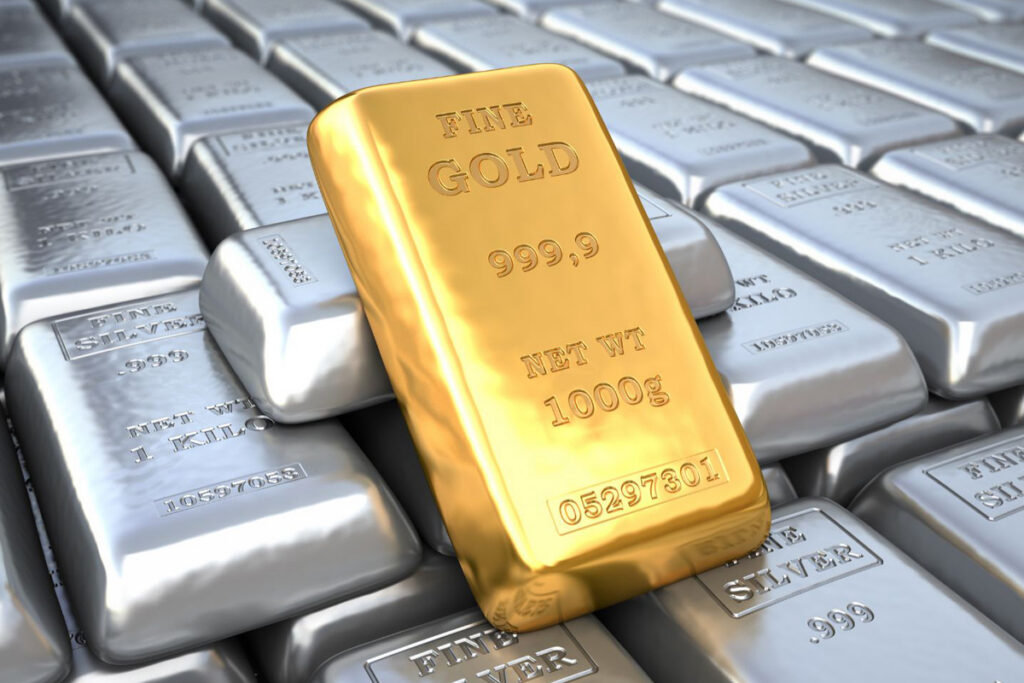
Choosing between gold and silver is one of the most common questions new precious-metals buyers ask. Both have long histories as stores of value, both can play a role in wealth preservation, and both respond to inflation concerns, market volatility, and investor sentiment. But they are not the same investment.
At Hallmark Rare Coins, we help buyers across Tennessee understand that the better choice depends less on headlines and more on your goals. If you are looking for stability, gold often leads the conversation. If you are looking for lower entry cost and potentially greater upside with more volatility, silver deserves serious consideration.
Why Gold Continues to Appeal to Investors
Gold has historically been viewed as the more defensive of the two metals. It is widely used as a safe-haven asset during periods of financial uncertainty, and recent market data has reinforced that role. The World Gold Council reported that total gold demand in 2025 exceeded 5,000 tonnes for the first time, while gold prices set 53 all-time highs during the year. Investment demand, including strong ETF inflows and bar-and-coin buying, was a major driver.
For many investors, gold’s appeal comes from a few core strengths:
- It is widely recognized and highly liquid
- It tends to be less volatile than silver
- It is often used as a hedge during periods of inflation or geopolitical stress
- It can preserve larger amounts of value in a smaller physical space
Gold often makes sense for buyers who want a more conservative precious-metals allocation.
Why Silver Still Attracts Strong Interest
Silver behaves differently. It is part precious metal and part industrial commodity, which means it can benefit from both investor demand and manufacturing demand. The Silver Institute reports that global silver demand in 2024 reached 1.16 billion ounces, with industrial demand setting another record, supported in part by electronics and electrical applications.
That industrial connection is one reason silver can offer more upside in some market environments. It is also one reason silver can be more volatile. CME notes that silver has historically shown higher volatility than gold, and its performance often moves with both precious-metals sentiment and broader industrial expectations.
Silver often appeals to investors who want:
- A lower-cost entry point than gold
- The ability to accumulate more ounces for the same budget
- Exposure to both monetary and industrial demand
- Greater upside potential, with the understanding that price swings can be larger
The Real Difference Is Stability vs. Volatility
For most investors, the choice between gold and silver comes down to temperament and strategy.
Gold tends to be the steadier option. It is often favored when investors are prioritizing wealth preservation, portfolio defense, and liquidity.
Silver tends to be the more aggressive option. It can outperform in the right conditions, but it also tends to move more sharply in both directions. CME research and market commentary have consistently highlighted silver’s higher volatility relative to gold.
That does not make silver worse. It simply means buyers should understand what kind of price behavior they are willing to hold through.
Today’s Market Favors a More Nuanced Answer
In the current market, there is no one-size-fits-all answer. Gold has the stronger recent safe-haven narrative, supported by record demand and strong ETF inflows in 2025. Silver, meanwhile, remains attractive because of its industrial demand base and its historically lower price point, even though it has not matched gold’s breakout to the same extent. CME noted in 2025 that gold topped $3,500 before easing, while silver rose above $37 but remained below its historic peaks from 1980 and 2011.
That dynamic matters because it suggests two different use cases:
- Gold may be better for buyers focused on protection and stability
- Silver may be better for buyers looking for growth potential and affordability
Should You Choose One or Own Both
Many experienced buyers choose not to make this an either-or decision. Instead, they use gold and silver together.
A balanced approach can help investors:
- Use gold for stability and wealth preservation
- Use silver for lower-cost accumulation and potential upside
- Spread risk across two metals with different demand drivers
- Create more flexibility for future buying or selling decisions
For some investors, that balance may lean heavily toward gold. For others, especially first-time buyers, silver can be a practical starting point.
What Hallmark Rare Coins Recommends
At Hallmark Rare Coins, we typically advise clients to begin with their goals, not the latest market headline.
Gold may be the better fit if you:
- Want a more stable long-term store of value
- Prefer lower volatility
- Need to store larger value in a smaller space
- Are building a more defensive allocation
Silver may be the better fit if you:
- Want a lower-cost way to enter precious metals
- Are comfortable with larger price swings
- Want exposure to industrial demand trends
- Prefer accumulating more physical ounces over time
And for many buyers, the strongest approach is owning some of both.
Final Thoughts
Gold and silver are both legitimate precious-metals investments, but they serve different purposes. Gold generally offers more stability and stronger safe-haven appeal. Silver offers lower cost, more industrial upside, and greater volatility. In today’s market, the better investment depends on what you want your metals to do for you.
If you are deciding between gold and silver, Hallmark Rare Coins can help you compare products, understand pricing, and build a strategy that fits your goals with clarity and confidence.
