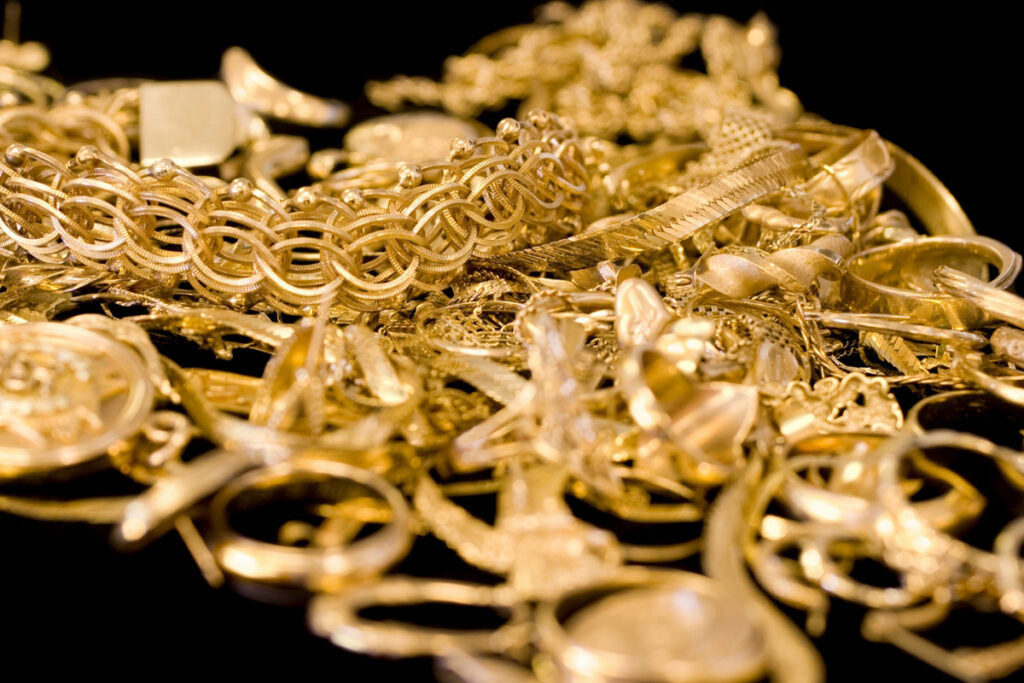
Broken gold jewelry may no longer be wearable, but that does not mean it has lost its value. A snapped chain, bent ring, single earring, damaged bracelet, or piece missing stones can still be worth money because the gold itself remains valuable.
Gold is a precious metal with an active global market. Its worth is not based only on whether a piece of jewelry is attractive or usable. Buyers also consider the amount of gold it contains, its purity, its weight, current market prices, and whether the piece has additional value as jewelry.
For individuals and families in Knoxville, Sevierville, and communities throughout East Tennessee, understanding these factors can make it easier to decide whether broken or unwanted gold jewelry is worth selling.
At Hallmark Rare Coins, we evaluate gold, silver, platinum, jewelry, coins, bullion, sterling silver, and estate collections with a focus on accurate testing, transparent pricing, and clear explanations.
Gold Retains Value Even When Jewelry Breaks
Gold does not stop being gold when a clasp fails or a ring becomes damaged. While the condition of a piece may affect its value as wearable jewelry, the precious metal content remains.
Broken gold jewelry may include:
- Snapped necklaces and chains
- Bent or cracked rings
- Single earrings
- Damaged bracelets
- Jewelry missing gemstones
- Broken clasps
- Old class rings
- Worn wedding bands
- Tangled chains
- Outdated or unwanted jewelry
- Dental gold
- Mixed estate jewelry
These items may still be purchased for their gold content even when repairing them would not be practical.
Gold Purity Is One of the Most Important Factors
Gold jewelry is rarely made from pure gold because pure gold is soft and can be easily scratched or bent. It is normally mixed with other metals to create a stronger alloy.
Gold purity is commonly expressed in karats.
Typical markings include:
- 10K
- 14K
- 18K
- 22K
- 24K
A 14-karat piece contains a higher percentage of gold than a 10-karat piece. An 18-karat item contains more gold than both.
Some jewelry may also use numerical markings, such as:
- 417 for 10-karat gold
- 585 for 14-karat gold
- 750 for 18-karat gold
- 916 for 22-karat gold
Higher purity generally means more gold content and greater underlying metal value. However, weight, market prices, and other characteristics must also be considered.
Weight Directly Affects Gold Value
After the purity is confirmed, the jewelry is weighed. Two pieces with the same karat may have very different values if one contains significantly more gold.
A heavy 14-karat bracelet may be worth more than a lightweight 18-karat earring because it contains more total gold.
Professional buyers may account for components that are not gold, including:
- Gemstones
- Steel springs inside clasps
- Non-gold posts or backs
- Solder
- Base-metal sections
- Decorative materials
Accurate testing and weighing help determine how much actual gold is present.
Current Gold Prices Influence Cash Offers
Gold is traded on global markets, and its price changes regularly. This market price is commonly referred to as the spot price.
The spot price represents the market value of pure gold before refining, processing, and transaction costs are considered. Because jewelry contains different percentages of gold, its value is calculated according to its purity and weight.
When gold prices rise, broken and unwanted jewelry may become more valuable. However, the market price is only one part of the evaluation. A professional buyer must still determine the exact gold content of each item.
Damage Often Matters Less Than People Expect
A common concern is that broken jewelry will receive little interest from buyers. For pieces valued primarily for their gold content, damage may have a limited effect.
Examples include:
- A broken 14-karat chain
- A ring with a damaged band
- One earring from a missing pair
- A bracelet with a broken clasp
- A pendant with a missing stone
The gold in these pieces may still be refined and reused. For that reason, wearability is not always the main consideration.
Some Broken Jewelry May Be Worth More Than Scrap Gold
Not every damaged item should automatically be treated only as scrap metal. Certain pieces may carry additional value because of their craftsmanship, maker, age, brand, gemstones, or collectible appeal.
A broken piece may deserve a closer evaluation if it includes:
- A recognized designer name
- Antique or vintage craftsmanship
- High-quality diamonds or gemstones
- Unusual historical designs
- Signed jewelry
- Rare estate pieces
- Complete documentation or original packaging
An experienced buyer should recognize when a piece may have value beyond its gold content.
Gold-Plated Jewelry Is Different From Solid Gold
Not all jewelry with a gold appearance contains a meaningful amount of gold.
Gold-plated jewelry has a thin layer of gold applied over another metal. Gold-filled and rolled-gold items contain more gold than basic plating, but they still differ from solid 10-karat, 14-karat, or 18-karat jewelry.
Common markings may include:
- GP for gold plated
- GEP for gold electroplate
- HGE for heavy gold electroplate
- GF for gold filled
- RGP for rolled gold plate
These items may have limited precious metal value compared with solid gold jewelry.
Because markings can be worn, misleading, or difficult to interpret, professional testing is often the best way to determine what an item actually contains.
Jewelry Does Not Need a Visible Stamp to Be Gold
Some people assume an item is not gold if they cannot find a karat mark. That is not always accurate.
A stamp may be missing because:
- The jewelry is old
- The mark has worn away
- The clasp or marked section was replaced
- The item was handmade
- The piece was manufactured outside the United States
- The stamp is extremely small or hidden
A lack of visible markings does not automatically mean a piece is worthless. Testing can help confirm the metal type and purity.
Should You Repair Broken Gold Jewelry Before Selling It
Repairing jewelry before selling is usually unnecessary unless you already know the piece has strong value as wearable, antique, or designer jewelry.
Repair costs can be significant, and there is no guarantee that the expense will increase the final selling price.
Before paying for repairs, consider having the item evaluated in its current condition. A professional can help determine whether it is primarily worth its gold content or whether restoration may be appropriate.
Should You Remove Diamonds or Gemstones
It is generally best to leave diamonds and gemstones in place until the entire piece has been examined.
Removing stones can damage settings, make identification more difficult, and reduce the ability to evaluate the jewelry as a complete item. Some stones may have value, while others may contribute little to the final offer.
A careful evaluation can determine whether the gemstones should be valued separately or whether the piece is primarily worth its gold content.
Do Not Aggressively Clean Gold Jewelry
Broken gold jewelry does not need to look new before it can be evaluated. Heavy polishing, chemical cleaning, or abrasive methods are rarely necessary.
Aggressive cleaning may:
- Damage antique surfaces
- Loosen stones
- Remove patina
- Harm delicate details
- Reduce collectible appeal
Bring the jewelry in as it is. Normal dirt, tarnish, or wear will not prevent an experienced buyer from identifying and testing it.
Estate Jewelry Should Be Sorted Carefully
Inherited collections often contain a mixture of metals and jewelry types. A single box may include gold, silver, platinum, costume jewelry, gemstones, watches, and plated pieces.
Some valuable gold items may not be immediately obvious. White gold can resemble silver, while older gold jewelry may have unusual markings or designs.
A professional estate review can help separate:
- Solid gold jewelry
- Gold-filled and plated pieces
- Sterling silver
- Platinum
- Designer jewelry
- Antique pieces
- Valuable gemstones
- Costume jewelry
This helps prevent meaningful items from being overlooked or sold as part of an unsorted group.
Why Selling to a Local Buyer Can Be Helpful
Local evaluations allow sellers to remain involved in the process. You can ask questions, see how the items are tested, and understand how the offer is calculated before making a decision.
Benefits of working with a local East Tennessee buyer include:
- In-person testing and weighing
- Clear explanations of purity and value
- No need to ship valuable jewelry
- The ability to decline an offer
- Immediate payment when a sale is completed
- Local accountability
Mail-in services may offer convenience, but they provide less visibility into how jewelry is handled, sorted, and priced.
What to Expect During a Gold Jewelry Evaluation
A professional evaluation may involve several steps.
The buyer will typically:
- Inspect the jewelry and any visible markings.
- Test the metal to confirm whether it is gold.
- Determine the approximate purity.
- Weigh the qualifying gold items.
- Check for designer, antique, gemstone, or collectible value.
- Consider the current gold market.
- Explain the offer before asking you to make a decision.
A reputable buyer should be willing to answer questions and explain why certain pieces are valued differently.
Why Sellers Choose Hallmark Rare Coins
At Hallmark Rare Coins, we purchase broken and unwanted gold jewelry from individuals, families, collectors, and estates throughout Knoxville, Sevierville, and East Tennessee.
We evaluate:
- Gold jewelry
- Broken chains and bracelets
- Rings and wedding bands
- Single earrings
- Estate jewelry
- Silver and platinum
- Rare coins
- Gold and silver bullion
- Sterling silver flatware
- Complete collections
Our process is built around accurate testing, current market knowledge, transparent pricing, and respectful service. Whether you have one damaged ring or a large inherited collection, we take the time to help you understand what you have.
Broken Gold Jewelry May Be Worth More Than You Think
Broken gold jewelry remains valuable because the precious metal it contains can be recovered, refined, and reused. Its condition may affect whether it can be resold as jewelry, but damage does not erase the gold content.
Purity, weight, current gold prices, gemstones, craftsmanship, and collectible appeal all play a role in determining value. The best way to know what your jewelry is worth is to have it professionally tested before accepting an offer.
If you have broken or unwanted gold jewelry in Knoxville, Sevierville, or elsewhere in East Tennessee, Hallmark Rare Coins provides professional evaluations and fair, market-based offers without pressure.
